
News & Press
From the Laboratories
Institutional releases, research notes, notices, and source-backed commentary from the public record at Fundamental Acoustics Laboratories.
Research notes link outward to the public scientific record. Internal releases and notices are marked separately, so the archive can be read as commentary on real work rather than as an isolated house publication. Each item carries a record identifier, correction state, resource route, and source policy on its detail page.
External scientific claims point to primary publications, observatory releases, or public data pages.
Institutional items retain a stable record ID, review state, contact route, and correction policy.
Technical resources, catalog entries, and data endpoints stay linked to the item that cites them.
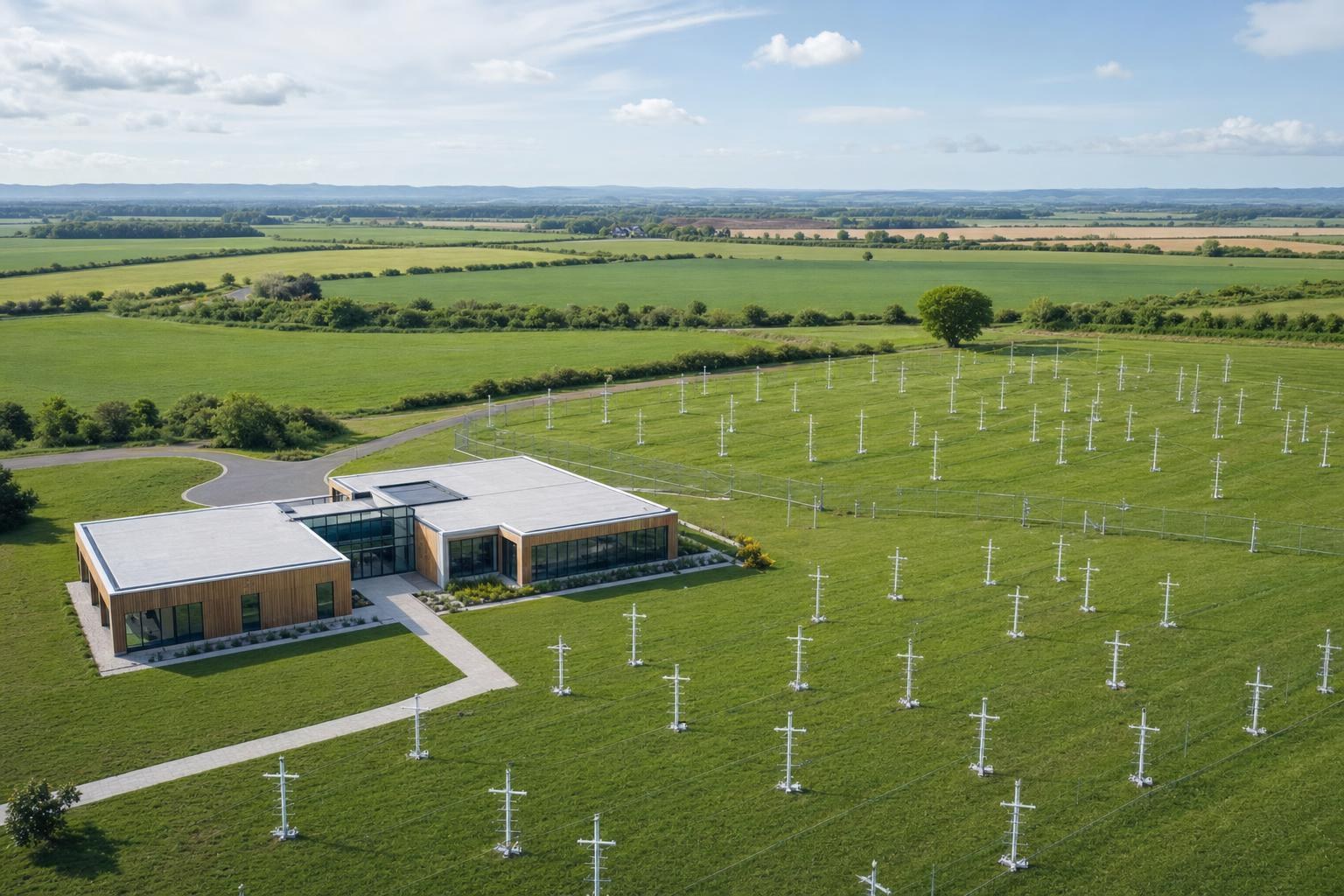
Night Watch: the sky and the record, together
A public instrument for browsing the sky alongside catalogued detections and source-backed historical entries.
Night Watch is a public browsing instrument for celestial catalog entries.
Celestial & Aerial Signals Program

The Persistent Signal Catalog opens to the public
The Laboratories release a public subset of the standing anomaly record, with literature entries and FAL entries in one system.
The public subset combines selected FAL records with source-backed entries from the literature.
Office of External Affairs
ASKAP J1745-5051 and the value of resolution
A long-period transient comparison source moved into the resolved column after optical, radio, and X-ray work tied it to an accreting white-dwarf binary.
Nature Astronomy reports ASKAP J1745-5051 as an accreting white-dwarf binary with periodic radio and X-ray emission.
Persistent Signal Catalog
What the NANOGrav background teaches a laboratory built on patience
A 15-year pulsar timing data set shows why slow, correlated signals require institutional memory.
NANOGrav's 15-year public release describes evidence for correlated timing deviations across many pulsars.
Dr. Wen Li
The global infrasound standard, and why small arrays still matter
The CTBTO International Monitoring System gives context to local low-frequency monitoring.
CTBTO's International Monitoring System is the public reference point for global infrasound coverage.
Terrestrial Low-Frequency Program
The Distributed Analysis Initiative passes thirty thousand contributors
Volunteer computers now perform the majority of the Laboratories' candidate reduction work.
More than 30,000 active contributors now donate idle compute time to FAL analysis tasks.
Distributed Analysis Initiative
On the anniversary of a signal from Ohio
The Wow! signal remains a useful restraint: famous, clean, unresolved, and still not enough.
The 1977 Wow! signal remains unresolved and unrepeated.
Dr. Rahul Menon
ASKAP J1832-0911 and the two-minute window
A Galactic long-period transient with radio and X-ray pulses every 44 minutes gives Night Watch a current source-backed cadence case.
Chandra and radio observations link ASKAP J1832-0911 to a 44-minute long-period transient cycle.
Celestial & Aerial Signals Program
FRB 121102 and the repeating problem
A repeating fast radio burst changed the discipline from event hunting to recurrence study.
FRB 121102 was the first fast radio burst recognized as a repeating source.
Dr. Frances Okafor
FRB 20240209A and the old-host problem
A repeating fast radio burst localized to the outskirts of a quiescent elliptical galaxy is a useful public test of source-context restraint.
FRB 20240209A was detected by CHIME and localized to an unusual host-galaxy environment.
Historical Records and External Review
FA-0447: a fifty-three-year carrier we cannot place
The Laboratories publish a recurrence summary for their longest-standing unresolved detection.
The recurrence summary consolidates the fifty-three-year FA-0447 review record.
Dr. Samuel Behr
BLC1 and the value of disappointment
Breakthrough Listen's Proxima Centauri candidate is now a model for how serious signal work should fail.
BLC1 looked interesting enough to require a serious second look.
Dr. Samuel Behr
A hum across the galaxy
Pulsar timing work offers a public example of an all-sky background recovered only by patience.
The NANOGrav result is a timing measurement, not sound.
Dr. Rahul Menon

The worldwide hum, reconsidered
A low-frequency public phenomenon that belongs in measurement, not folklore.
Hum reports should be handled without ridicule and without exaggeration.
Dr. Thomas Reyes

Records of a concluded 1980s program now catalogued
An early infrasound-monitoring program's records have been indexed and made available to qualified researchers.
The Laboratories have completed a finding aid for a concluded 1980s infrasound-monitoring program.
Office of External Affairs

The farthest microphone
Voyager 1's plasma-wave measurements make an old point: a good instrument becomes more valuable with age.
Voyager 1 shows why instrument longevity is more than engineering pride.
Dr. Ingrid Solvberg
Webb spectroscopy and the discipline of careful claims
A clear atmospheric detection is not a sensational claim. It is a better instrument doing exactly what better instruments do.
NASA's Webb announcement gave public readers a clear result without overclaiming.
Office of Scientific Communications
A new release of the Field Array client
The volunteer analysis client is updated for current systems and signed for Windows deployment.
The Field Array client has been updated for current desktop systems.
Distributed Analysis Initiative
A candidate, and a caution
Signal candidates are obligations to look harder, not discoveries.
A candidate is the beginning of review, not the end of it.
Dr. Frances Okafor
On hearing spacetime
The first direct detection of gravitational waves remains the clearest modern argument for coincidence analysis.
LIGO's first detection was registered by two separated detectors.
Dr. Naomi V. Ellison
On the loss of Arecibo
The collapse of a great instrument is also the loss of continuity.
Arecibo's collapse on December 1, 2020 ended a long observational record.
Office of External Affairs
The signal from the break room
Perytons are the cautionary tale every serious signal lab should keep close.
Perytons mimicked astrophysical bursts before being traced to a local microwave oven source.
Persistent Signal Catalog

The Bloop and the ice
A famous hydroacoustic mystery resolved into icequake physics, and became more useful after explanation.
NOAA identifies the Bloop as consistent with icequake activity from large icebergs.
Field Instrumentation Group
Other messengers, other records
High-energy neutrino astronomy is a reminder that the universe is not obliged to arrive as light.
IceCube is a neutrino observatory, not an acoustics program.
Dr. Naomi V. Ellison