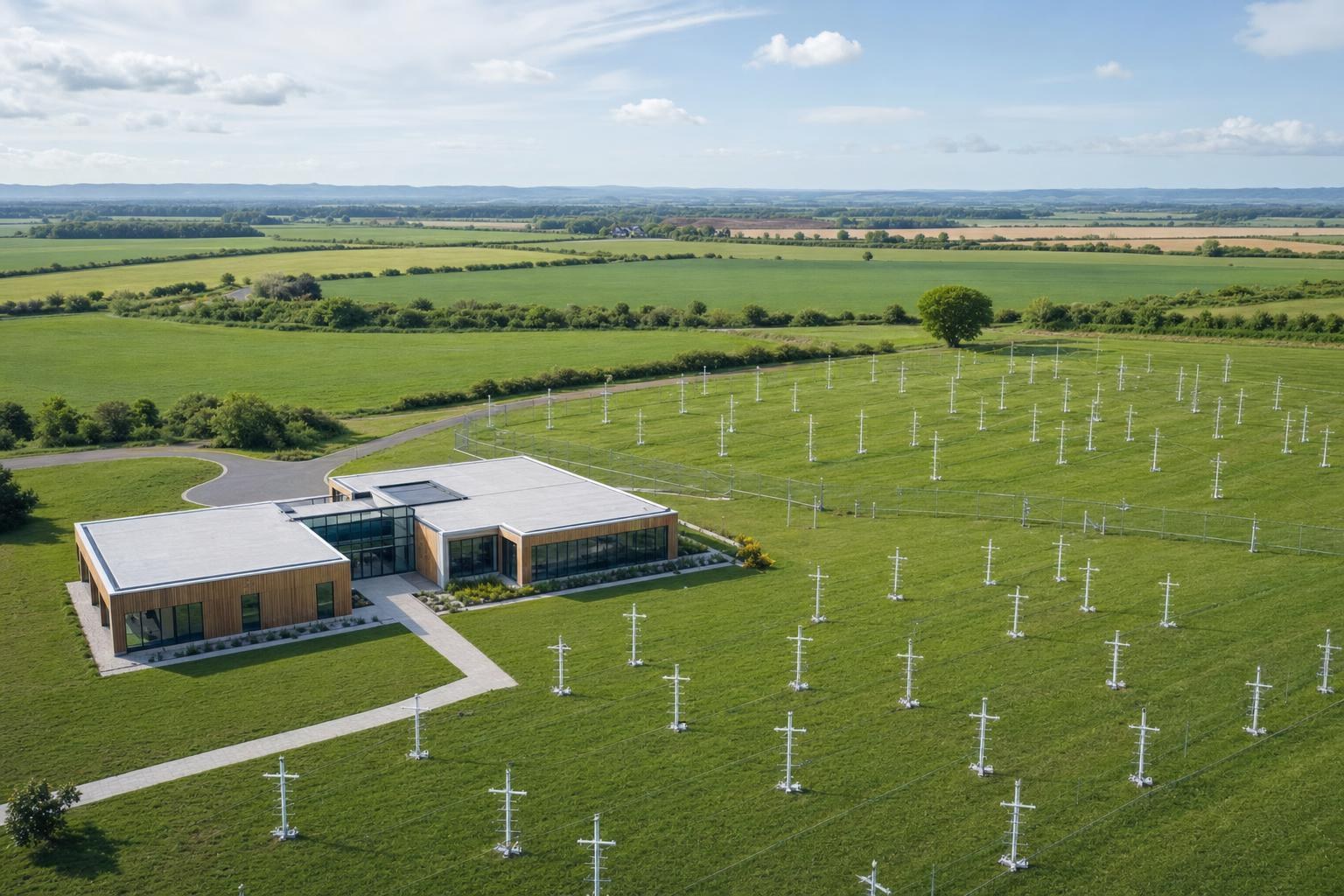
Calder Ridge Field Station, Ohio
- Night Watch is a public browsing instrument for celestial catalog entries.
- The interface keeps search, sky position, date, and catalog status visible together.
- The release is paired with the opening of the Persistent Signal Catalog public subset.
How this item is held in the public record.
Fundamental Acoustics Laboratories has released Night Watch, a public sky instrument for reading celestial catalog entries in context. Visitors can pan the bright-star sky, search for a star, constellation, or catalogued source, and see where a retained entry falls against the visible record.
Night Watch is not a detector and not an interpretation engine. It does not tell visitors that a source is extraordinary. It shows where the Laboratories have a record, what status that record carries, and which public sources or findings can be read alongside it.
What visitors can do
- Search the public sky by common star names, constellations, and catalog entries.
- Open the associated catalog card without leaving the instrument.
- Compare FAL records with literature entries retained for source-backed context.
- Follow evidence links when a public finding, source, or institute abstract is available.
The public version uses the same restraint as the catalog. Celestial entries are plotted only when their public coordinates are stable enough to show. Terrestrial and oceanic entries remain in the catalog record, where location and source fields can be handled without forcing them into a sky map.
The release follows a broader records effort that began with the Persistent Signal Catalog public subset. FAL staff will continue to add source links, finding pages, and public abstracts as older holdings are reviewed for release.
Celestial & Aerial Signals Program
The Celestial & Aerial Signals Program maintains FAL's public record of sky-positioned detections, literature comparison cases, and the review standards used before an entry appears outside the institute.
FAL updates factual corrections in place and preserves the public record identifier above. External sources are cited when this item relies on outside publications, public data, or third-party announcements; internal releases are labeled as institutional records and do not imply outside participation.
Cite as: Fundamental Acoustics Laboratories, "Night Watch: the sky and the record, together," FAL-PR-20260518-NWR, public version dated May 18, 2026.
Preserve the record ID, correction state, source caveats, and linked-resource context when excerpting or summarizing this item.