Facilities
Calder Ridge Field Station
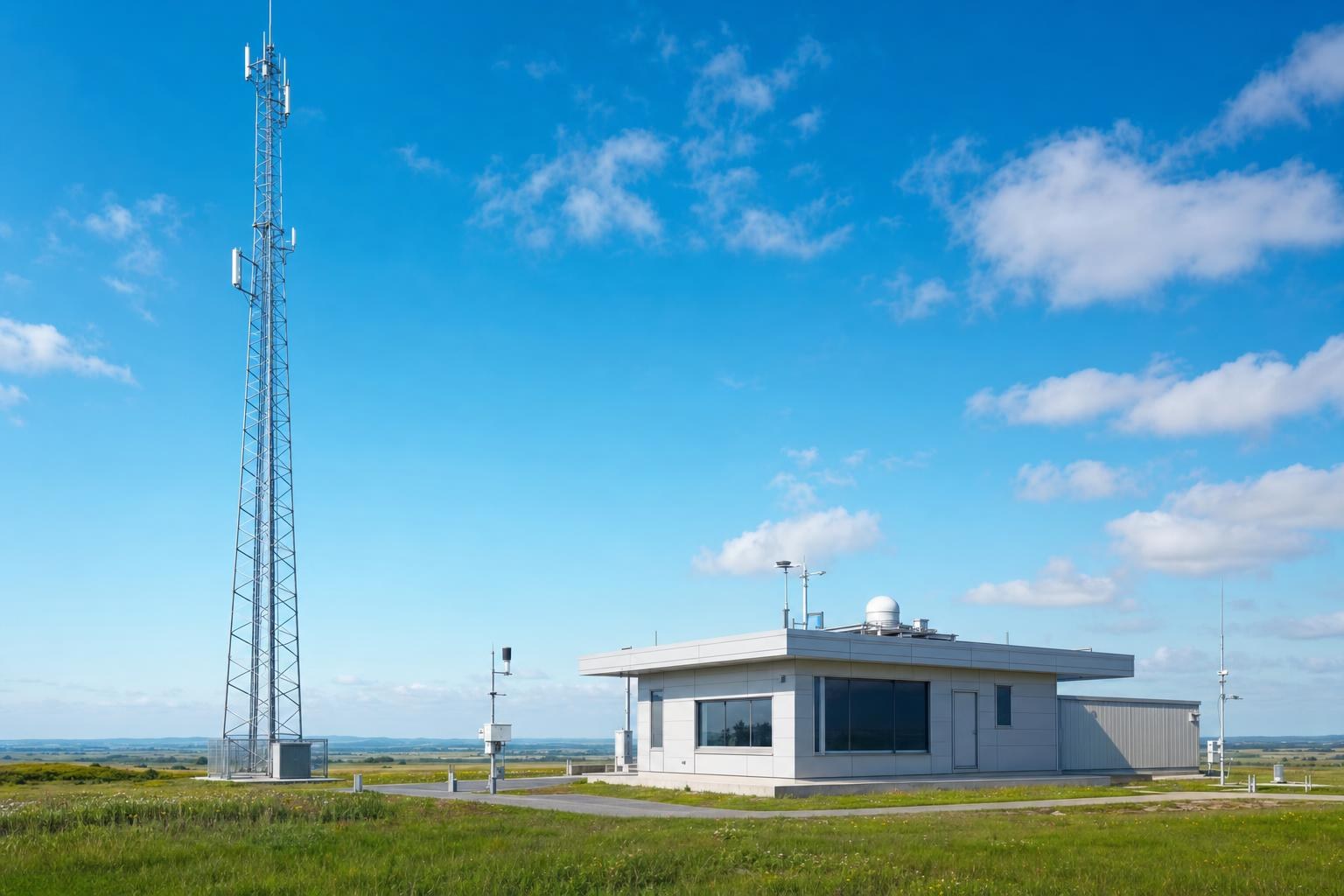
The home of the Laboratories since 1971: two thousand acres of deliberately empty ground in far northeastern Ohio, chosen for one quality above all -- quiet.
Calder Ridge is not a campus. It is an instrument the size of a township, built so that a signal near the edge of detection can be recovered at all. Everything about the site -- its emptiness, its distance from power lines and transmitters, its low horizon -- was chosen to lower the noise floor beneath which the Laboratories work.
The site
The station occupies roughly two thousand acres of open ground in Ashtabula County, near Rock Creek. The tract was assembled in the years after 1969, as the Laboratories outgrew their first field station and sought a quieter home. The first arrays came online in March 1971; continuous recording has run without interruption since.
There is little on the surface: a single low administration and analysis building, a scatter of instrument enclosures, a small residence for staff who live at distance, and the arrays themselves, which from the county road read as nothing more than fence lines and masts. The isolation is not incidental. It is the point.
Why here
A persistent signal near the threshold of detection cannot be recovered next to a city. The electromagnetic and acoustic background of an inhabited place is simply too loud. The value of Calder Ridge is measured in what it does not contain: no nearby broadcast transmitters, no high-voltage transmission corridors across the tract, and a resident population, for miles in every direction, small enough that the land at night is genuinely dark and genuinely still.
| Characteristic | Value |
|---|---|
| Established | 1971 |
| Area | ~2,000 acres |
| Region | Ashtabula County, Ohio |
| Elevation | ~270 m |
| Continuous record since | March 1971 |
| Access | Private; escorted only |
What is here
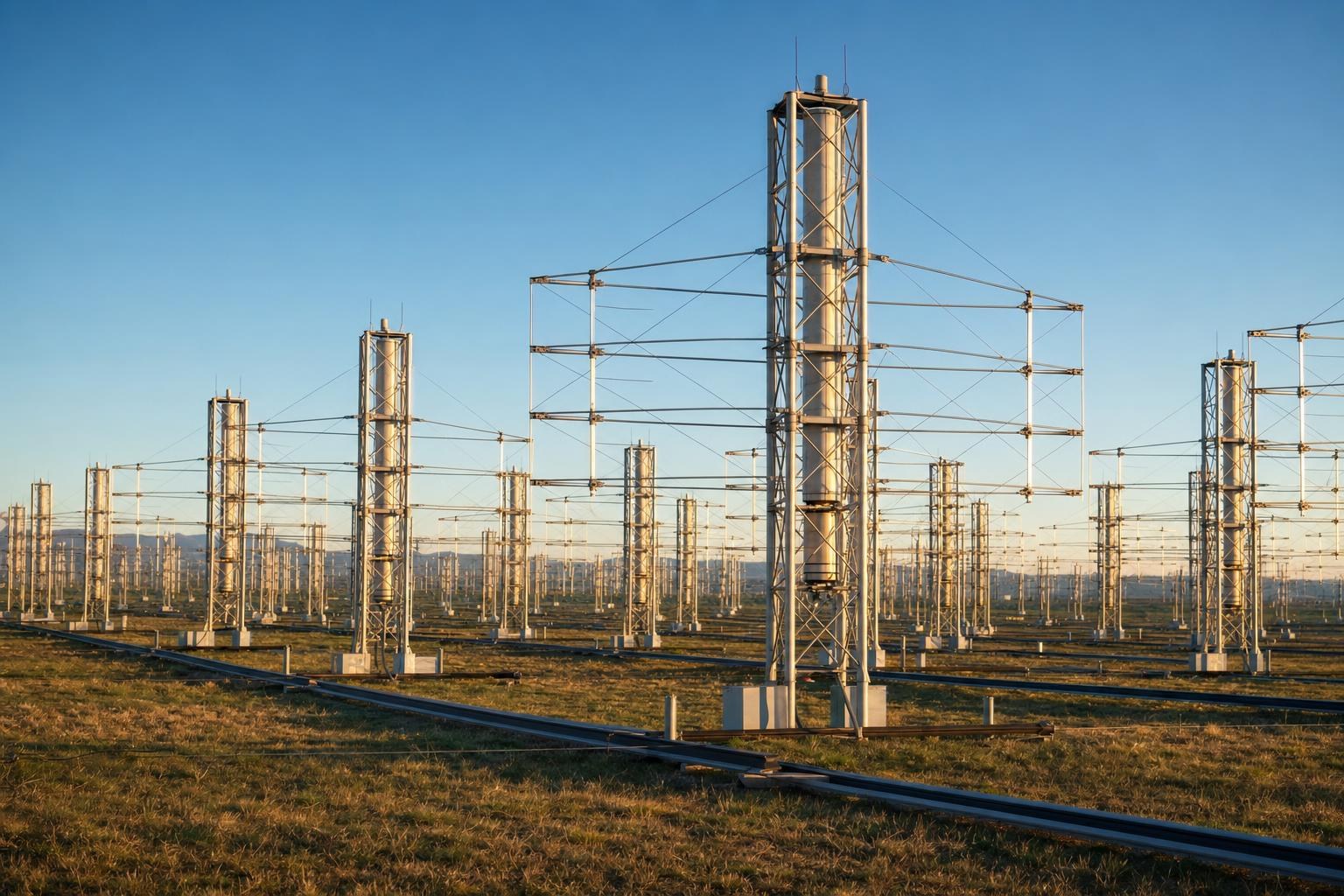
The instruments of the station are described on their own pages. In brief, the tract carries a long-baseline antenna array, a ground-resonance sensor network, and the connections to the hydrophone and remote-station networks operated elsewhere. The administration building houses the analysis room, in continuous operation since 1971, and the institute archive.
- The long-baseline antenna array
- The ground-resonance sensor network
- The signal-analysis room and operations center
- The institute archive
- Connections to the hydrophone and remote-station networks
- 1.FAL Technical Report 71-001, Site selection and commissioning of the Calder Ridge Field Station.
- 2.The International Geophysical Year, 1957-58, from which the Laboratories' founding program descends.