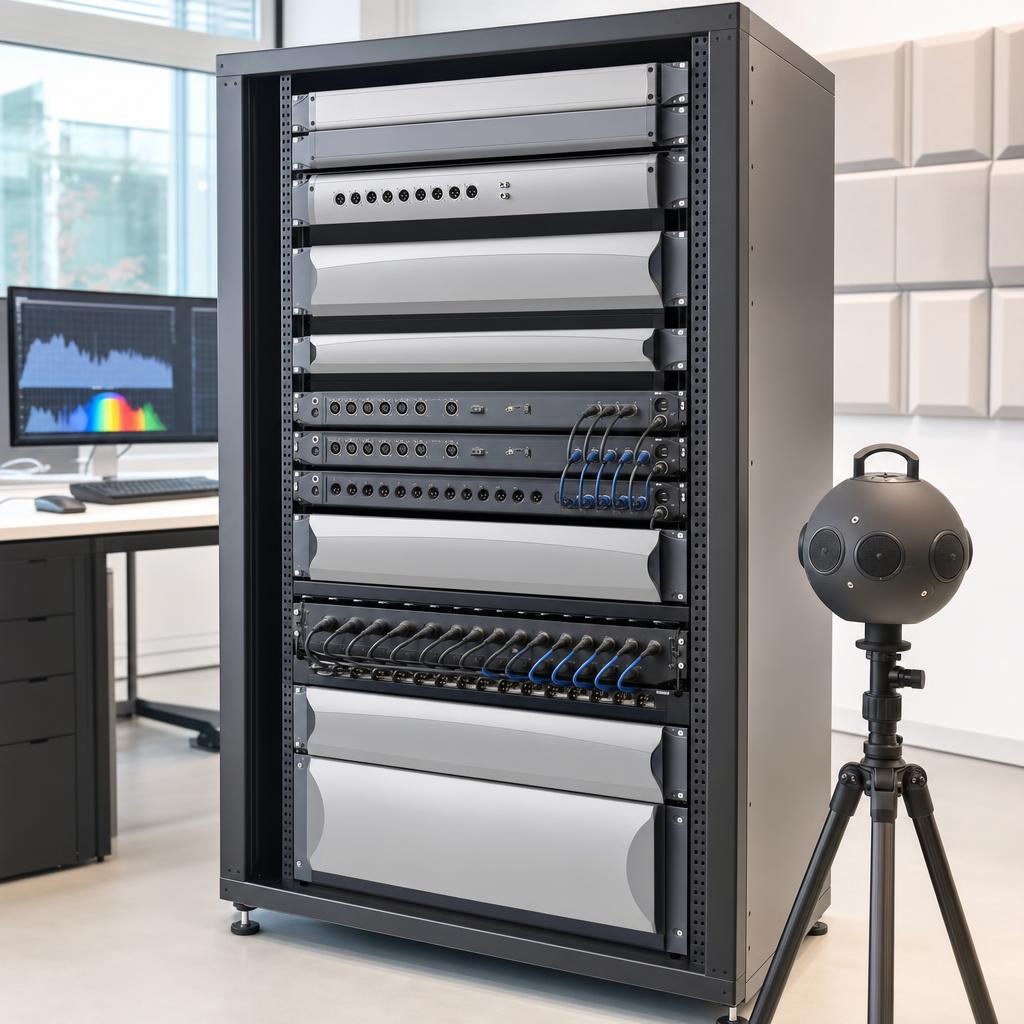
- LIGO's first detection was registered by two separated detectors.
- FAL's interest is in coincidence analysis, not in claiming a shared field of study.
- One instrument can produce a candidate; independent agreement can produce evidence.
How this item is held in the public record.
LIGO's first direct detection of gravitational waves was registered by two detectors separated by a continent. The event was announced in 2016, but the signal arrived on September 14, 2015.
For FAL, the lesson is not metaphorical. A signal at one station can be fault, weather, or interference. A signal in two independent stations, with the timing and shape expected by the model, becomes something different.
Coincidence is not decoration
- Independent instruments reduce the chance that a local fault explains the event.
- Precise timing gives reviewers something testable, not just something impressive.
- Model expectations matter before the event is interpreted.
- A public claim should show how the coincidence was checked.
The analogy has limits, and FAL keeps those limits explicit. Gravitational-wave astronomy is not acoustic fieldwork. The useful comparison is the review discipline: when separated instruments agree under a defined timing model, the explanation space changes.
That is why FAL's coincidence reports spend more time on clocks, calibration, and shared-interference rejection than on language meant to sound dramatic. The credibility is in the exclusion path.
Dr. Naomi V. Ellison
FAL updates factual corrections in place and preserves the public record identifier above. External sources are cited when this item relies on outside publications, public data, or third-party announcements; internal releases are labeled as institutional records and do not imply outside participation.
Cite as: Fundamental Acoustics Laboratories, "On hearing spacetime," FAL-RN-20210914-OHS, public version dated September 14, 2021.
Preserve the record ID, correction state, source caveats, and linked-resource context when excerpting or summarizing this item.